
Most people assume steampunk must be a genuine Victorian term—something muttered by an engineer in a soot-covered workshop while adjusting his goggles. In truth, the word is surprisingly modern. It was coined in 1987 by author K. W. Jeter, who rather cheekily used it to describe a new wave of stories inspired by 19th-century science, invention, and adventure. The “steam” part was obvious enough, but “punk” was borrowed from the already-established genre of cyberpunk—proving that even a world of brass, gears, and top hats occasionally owes something to the 1980s.
Since then, it has expanded to encompass various forms of media, including literature, art, fashion, and even music, with enthusiasts often creating their own steampunk-inspired costumes and gadgets.
The Victorians (an era roughly spanning 1837 to 1901) had a reputation for thinking big—railways, steam power, iron bridges, and enough engineering to cover half the Empire. But while they were busy changing the world on a grand scale, they were also quietly inventing many of the everyday gadgets and comforts we now barely notice… at least until one of them stops working.
Here’s a lighthearted list:


The writings of two Victorian authors, Jules Verne and HG Wells, have been hugely inspirational to the world of Steampunk.
Jules Verne is widely regarded as one of the pioneers of science fiction. His novels, filled with futuristic technology and fantastical inventions, strongly influenced steampunk’s themes and aesthetics.
Twenty Thousand Leagues Under the Sea (1870) introduced Captain Nemo and the submarine Nautilus, blending exotic sea creatures, adventure with exploration and technology.
Journey to the Center of the Earth (1864) and Around the World in Eighty Days (1873) captured imaginations with daring expeditions and global adventure, while From the Earth to the Moon (1865) astonishingly anticipated aspects of real space travel. Verne’s stories combined scientific detail, bold speculation, and a spirit of discovery that continues to inspire steampunk today.


H.G. Wells is often seen as a founding figure of science fiction. While his works don’t fit neatly into steampunk, they share themes and aesthetics that influenced the genre.
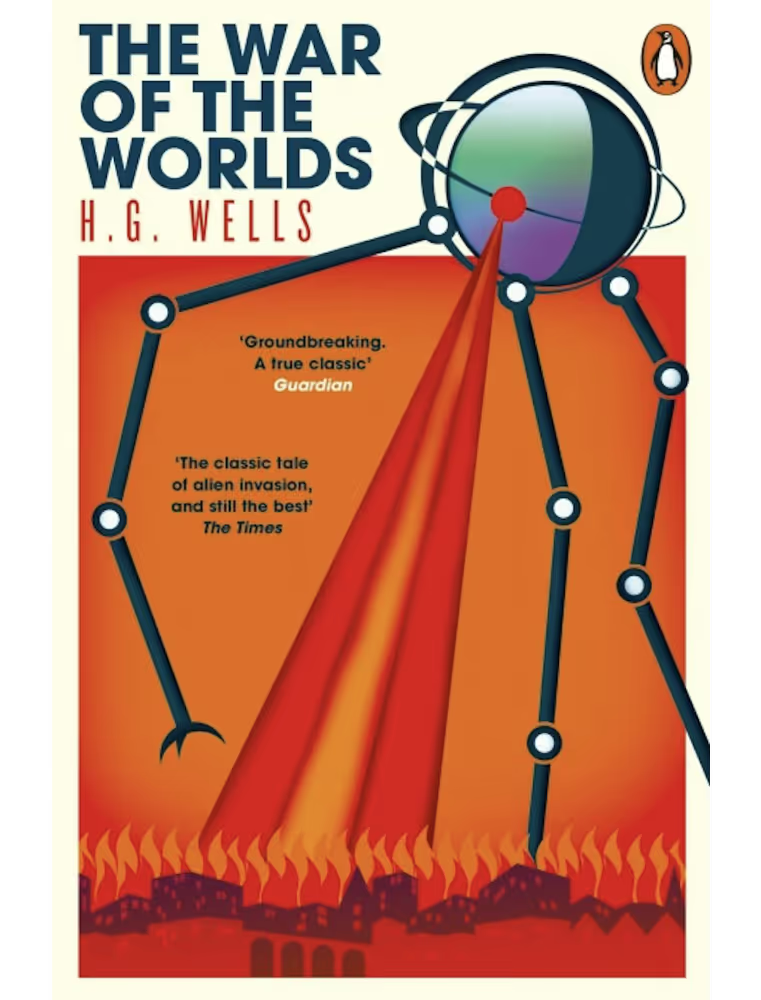
Novels like The Time Machine (1895), The War of the Worlds (1898), and The Invisible Man (1897) explore futuristic technology, alternate realities, and the consequences of scientific progress.
Like Jules Verne, Wells anticipated many 20th-century developments, blending Victorian-era settings with speculative inventions and social critique.
Though his stories often feature more advanced technology than classic steampunk, their fascination with industrialisation, ambition, and the perils of unchecked science continues to inspire steampunk creators today.

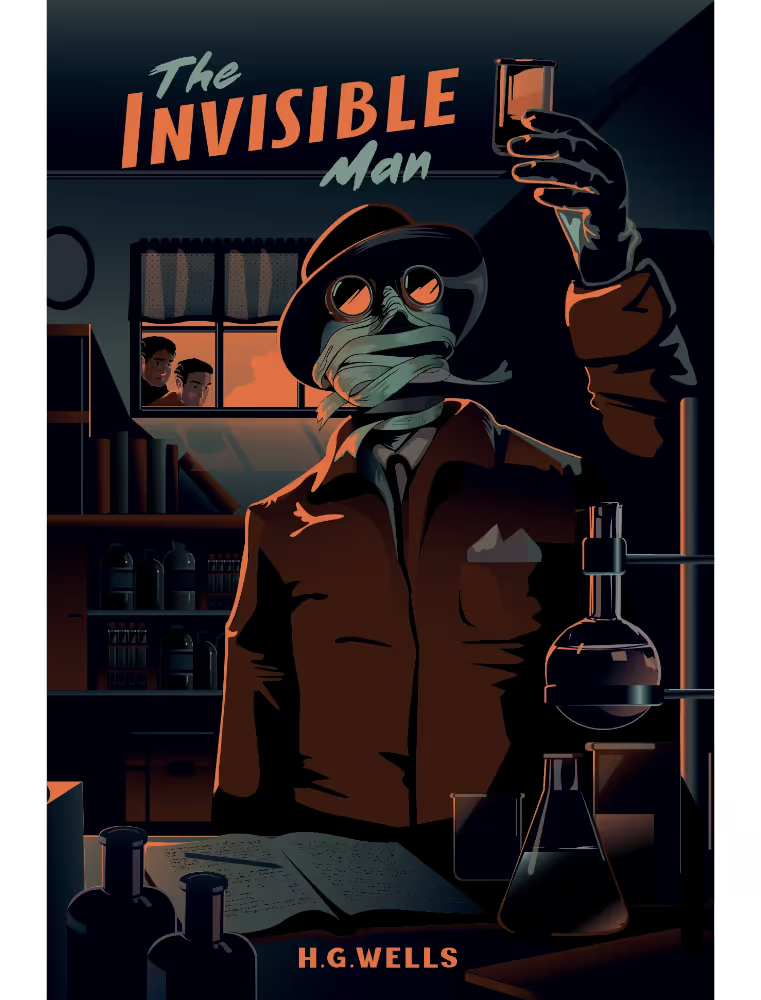
The godfathers of steampunk are H.G. Wells and Jules Verne. But, most people say the term 'steampunk' itself really took off in the 1980s, when American authors (such as K.W. Jeter, Tim Powers, James Blaylock) began writing deliberately in that retro-futurist, Victorian-sci-fi style.
British authors have been central in shaping the flavour of the genre, especially Pullman, Miéville, Mann, and Hodder.
Here are some more modern books to discover.
These steampunk themed books are where 'true' steampunk begins.
K.W. Jeter – Morlock Night (1979) and Infernal Devices (1987) - Jeter actually coined the word steampunk'.
Tim Powers – The Anubis Gates (1983) - Time-travel, sorcery, and 19th-century London atmosphere.
James P. Blaylock – Homunculus (1986) - Airships, mad scientists, and eccentric Victorian settings.


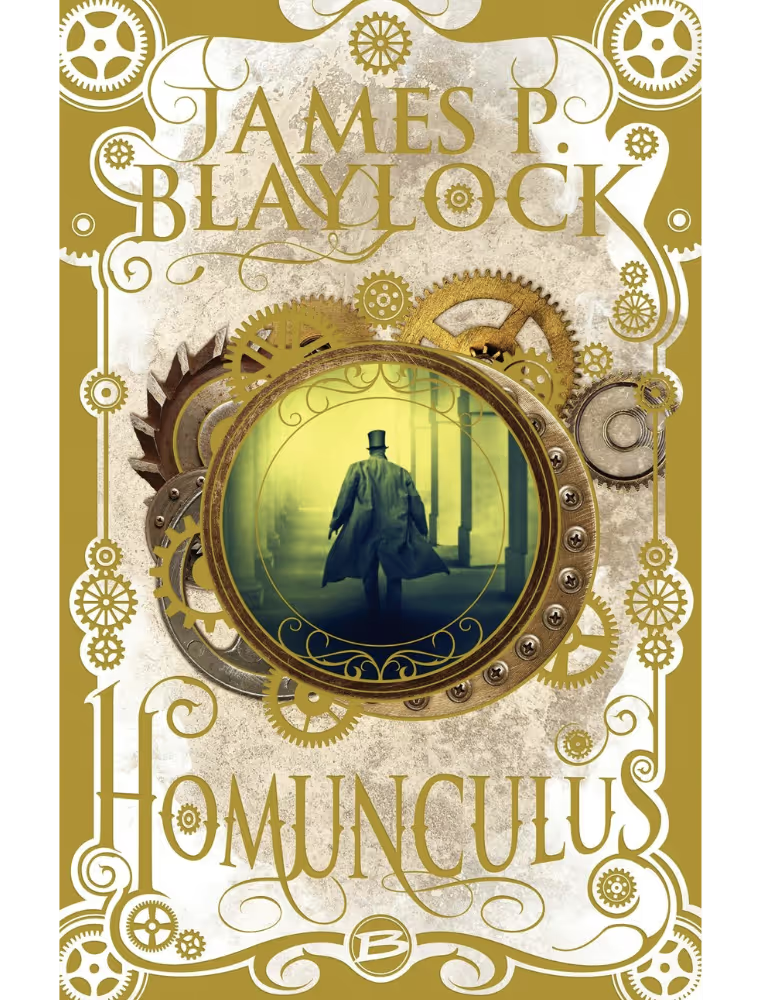
Modern-day English authors of steampunk themed books.
Philip Pullman – His Dark Materials trilogy (1995–2000) - Often described as steampunk-inspired: airships, alternate Oxford, clockwork technology. It became a popolar TV series.
China Miéville – Perdido Street Station (2000) - Dark, gritty “New Weird” fiction with strong steampunk machinery and cityscapes.
George Mann - Newbury & Hobbes detective/adventure series (2008 onwards) - Proper steampunk London with occult and detective elements.


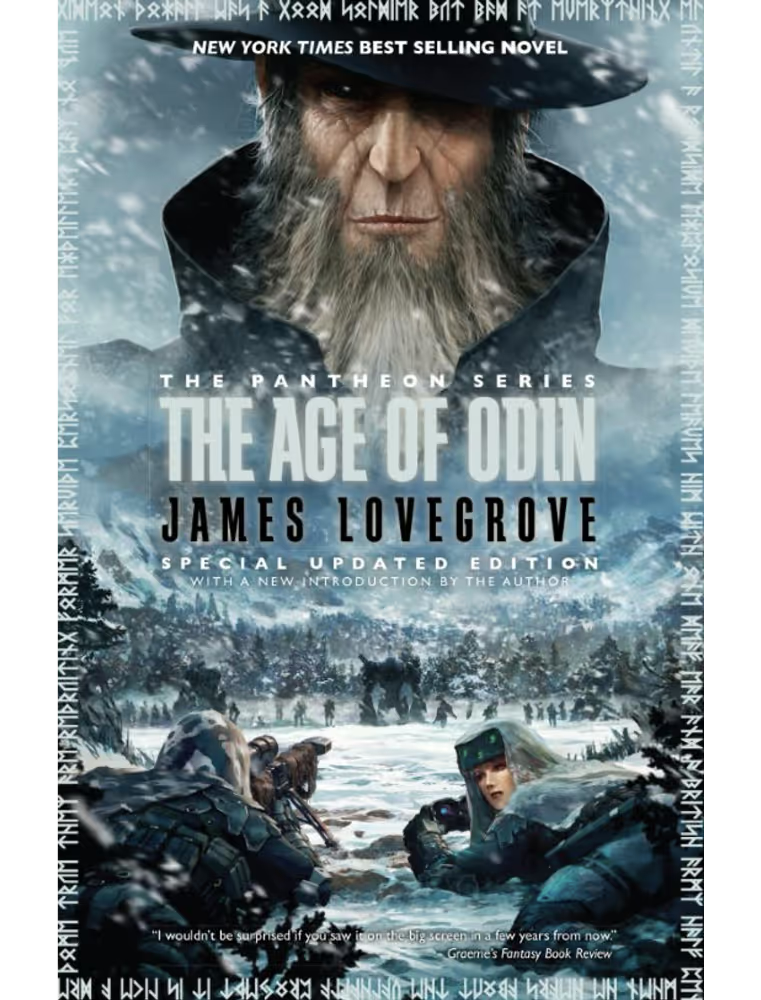
James Lovegrove –The Age of… series (like The Age of Ra, The Age of Odin) and Sherlock Holmes - stories which blend myth, history, and steampunk themes.
Stephen Hunt – The Court of the Air (2007) and sequels - A sprawling steampunk fantasy world.


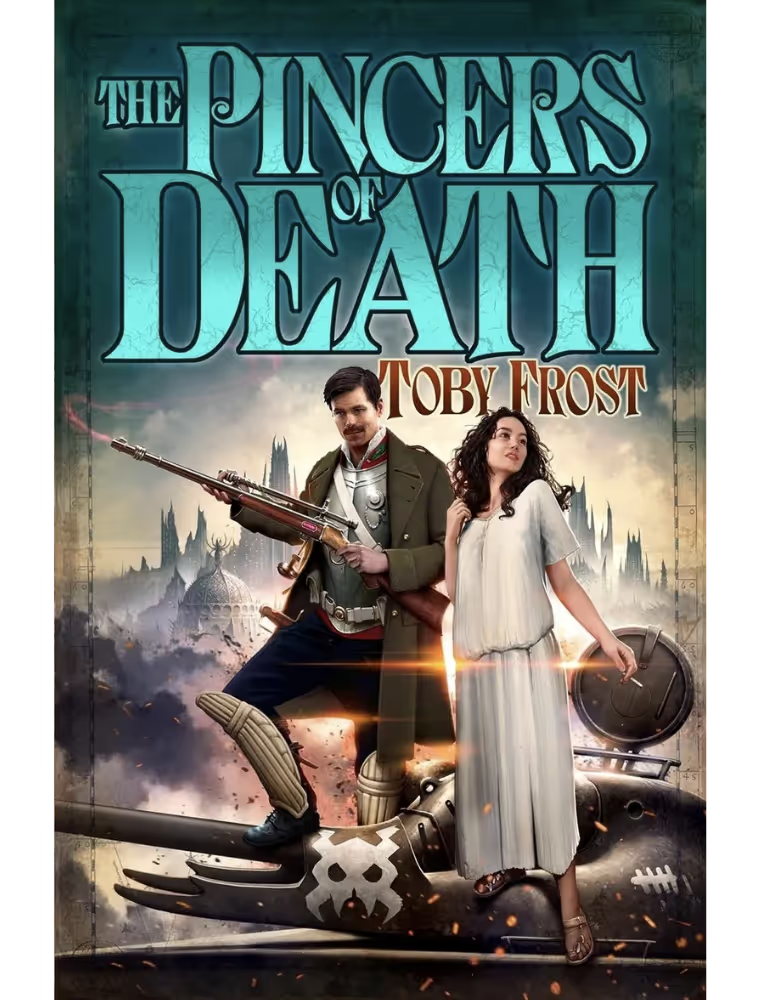
Toby Frost – Space Captain Smith series (2008 onwards) - More diesel/retro-pulp than pure steampunk, but with Victorian humour and gadgetry.
Mark Hodder – Burton & Swinburne series (like The Strange Affair of Spring-Heeled Jack) (2010) - Alt-history with explorers, inventors, and wild steampunk London.
Paul Eccentric - The Periwinkle Perspective series (2020 onwards) — Paul gave a performance at the inaugural IoW Steampunk Festival in 2024.


If Victorian literature feels daunting, check out steampunk in film. Here's a taster, old and new, which showcase steampunk's imaginative spirit.
These films are recognisable, even outside steampunk.
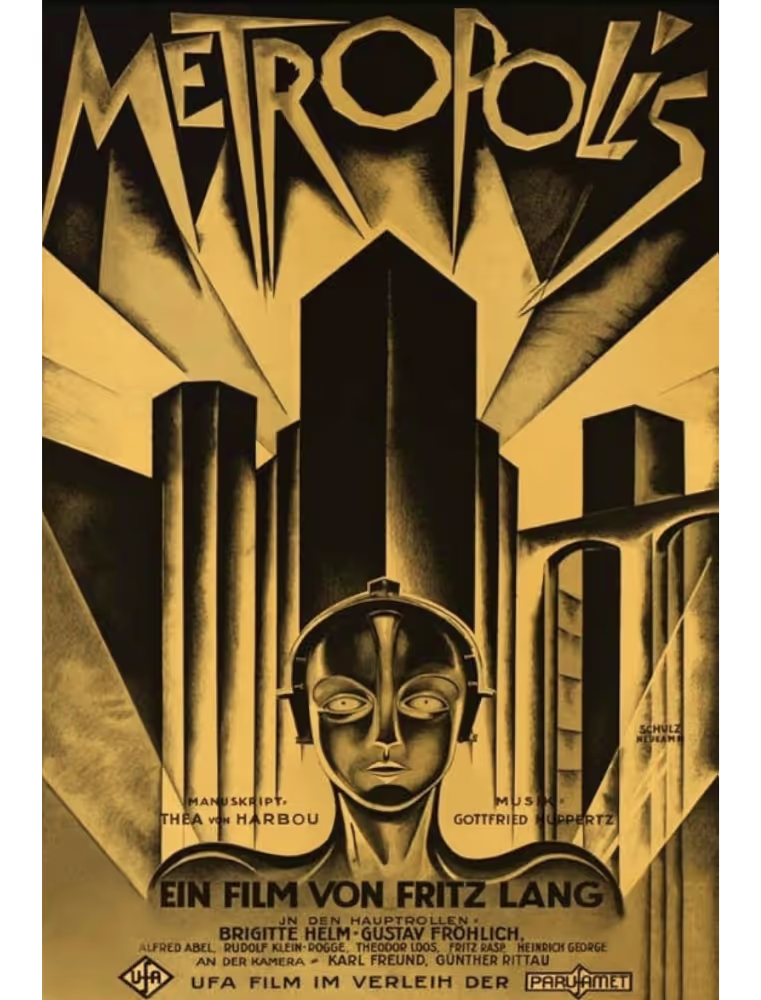
Metropolis (1927 / Cert 12A) – A landmark silent science-fiction film directed by Fritz Land, set in a vast futuristic city divided between wealthy elites and underground workers. Famous for its pioneering industrial design, mechanical imagery, and the iconic robot “Maria,” it remains one of the most influential visual precursors to steampunk aesthetics.
20,000 Leagues Under the Sea (1954 / Cert U) – A Disney adventure starring Kirk Douglas, James Mason, and Paul Lukas, based on the novel by Jules Verne. It follows Captain Nemo aboard the futuristic submarine Nautilus, featuring elaborate Victorian-era engineering and underwater exploration that strongly echoes steampunk themes.Disney’s adaptation of Jules Verne, with the iconic Nautilus submarine. The Nautilus design is one of the most iconic retro-futuristic machines ever put on screen.
The Time Machine (1960 / Cert U) – Based on the novel by H.G. Wells, this adaptation follows a Victorian inventor who travels far into the future to witness the fate of humanity. It is known for its imaginative Victorian scientific invention aesthetic and pioneering time-travel visuals for its era. The time machine prop itself is legendary. There was a 2002 US remake, but it didn't match the original film’s elegance or the novel’s philosophical bite.


Van Helsing (2004 / Cert PG) – A gothic action film starring High Jackman as a monster hunter working for the Vatican. He is sent to confront Dracula and other classic monsters in a stylised Victorian-inspired world filled with elaborate gadgets, airships, and dark scientific experiments.
The League of Extraordinary Gentlemen (2003 / Cert 12A) – Critically divided on release, but it has become something of a cult favourite among steampunk fans. Victorian adventurers, fantastical technology, ornate weaponry, airships, and a dark alternate-history aesthetic make it a natural fit for the genre.
Mortal Engines (2018 / Cert 12A) – Based on Philip Reeve's novel, the film is set in a post-apocalyptic steampunk world where entire cities have been mounted on wheels and motorised, and practice municipal Darwinism. Starring Hera Hilmar, Robert Sheeham and Hugo Weaving. Didn’t succeed at the box office, but visually bold and widely discussed in steampunk circles.


Although not mainstream hits, these films are beloved within the genre.
Brazil (1985 / Cert 15) – Directed by Terry Gilliam (Monty Python), this dystopian satire stars Jonathan Pryce, Robert De Nito, and Kim Greist. It depicts a nightmarish bureaucratic future dominated by malfunctioning machinery, ducts, and oppressive industrial systems, and is considered a landmark in retro-futurist and steampunk-adjacent design.
The City of Lost Children (1995 / Cert 15) – A cult classic, this dark, surreal French fantasy from directors Marc Caro and Jean-Pierre Jeunet, is set in a decaying industrial dreamworld where a scientist steals children’s dreams in an attempt to slow his own aging. It stars Ron Perlman as a gentle strongman searching for his kidnapped brother, and is widely admired for its striking, highly stylised steampunk-inspired design.
Wild Wild West (1999 / Cert PG) – A sci-fi western directed by Barry Sonnenfeld and starring Will Smith and Kevin Kline, alongside Kenneth Branagh as the villainous Dr Loveless. Famous for its extravagant gadgets and the giant mechanical spider, it has become a cult curiosity despite its critical reception, largely due to its bold visual imagination.


Steamboy (2004 / Cert PG) – An ambitious anime directed by Katsuhiro Otomo (creator of Akira), set in Victorian-era Britain and centred on a boy inventor caught between rival factions fighting over a powerful steam-based energy device. Known for its intricate mechanical detail and large-scale industrial set pieces, it is often cited as one of the most visually elaborate and most 'pure' steampunk-inspired films (though a bit dark and complex, so better for older kids/teens).
The Prestige (2006 / Cert PG) – Directed by Christopher Nolan and starring Christian Bale, Hugh Jackman, and David Bowie as Nikola Tesla, this Victorian-era drama follows rival magicians whose obsession with invention and illusion pushes them toward dangerous scientific experimentation. Its blend of early electrical technology, secrecy, and industrial-era innovation makes it a strong fit for steampunk-themed discussion.
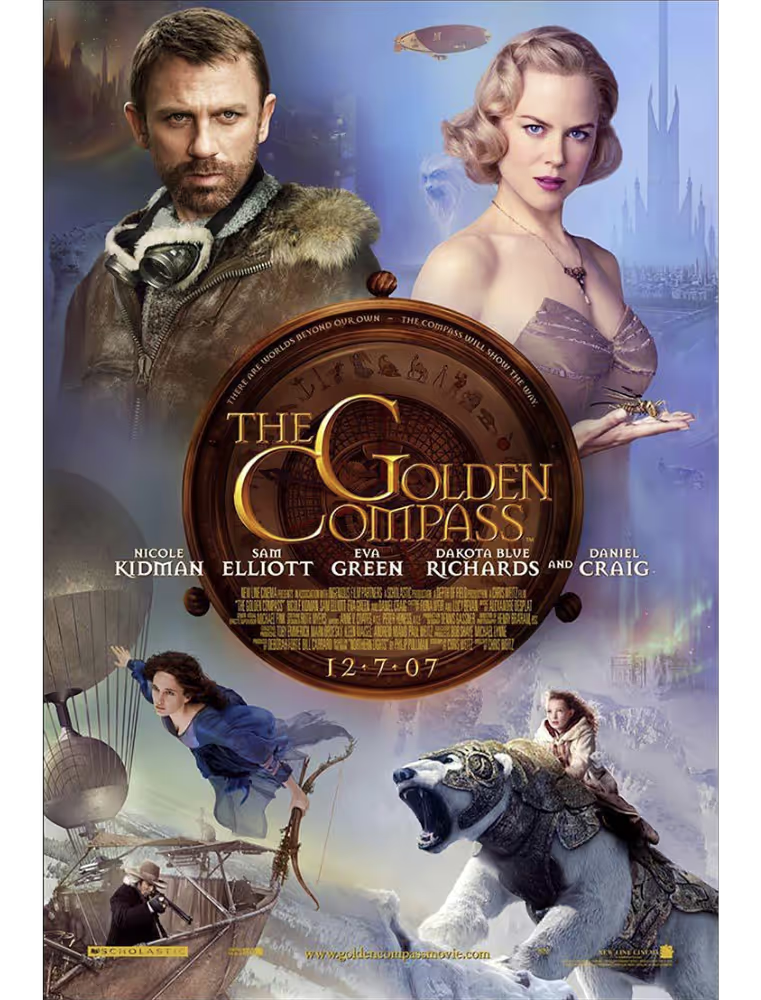
The Golden Compass (2007 / Cert PG) – Based on Philip Pullman’s novel Northern Lights, this big-budget, family-friendly fantasy adventure stars Dakota Blue Richards, Nicole Kidman, and Daniel Craig. Set in an alternate world of armoured polar bears, airships, and mystical science known as “Dust,” it features a richly designed industrial aesthetic that overlaps with steampunk themes. It later became the TV adaption His Dark Materials.


Not that many kids films are specifically steampunk, but a few family films weave in steampunk aesthetics with airships, clockwork gadgets, eccentric inventors, and whimsical machinery.
Laputa: Castle in the Sky (1986 / Cert PG) – A Studio Ghibli classic directed by Hayao Miyazaki about children discovering a floating island powered by ancient machinery, airships, and clockwork-style engineering in a lost technological world.
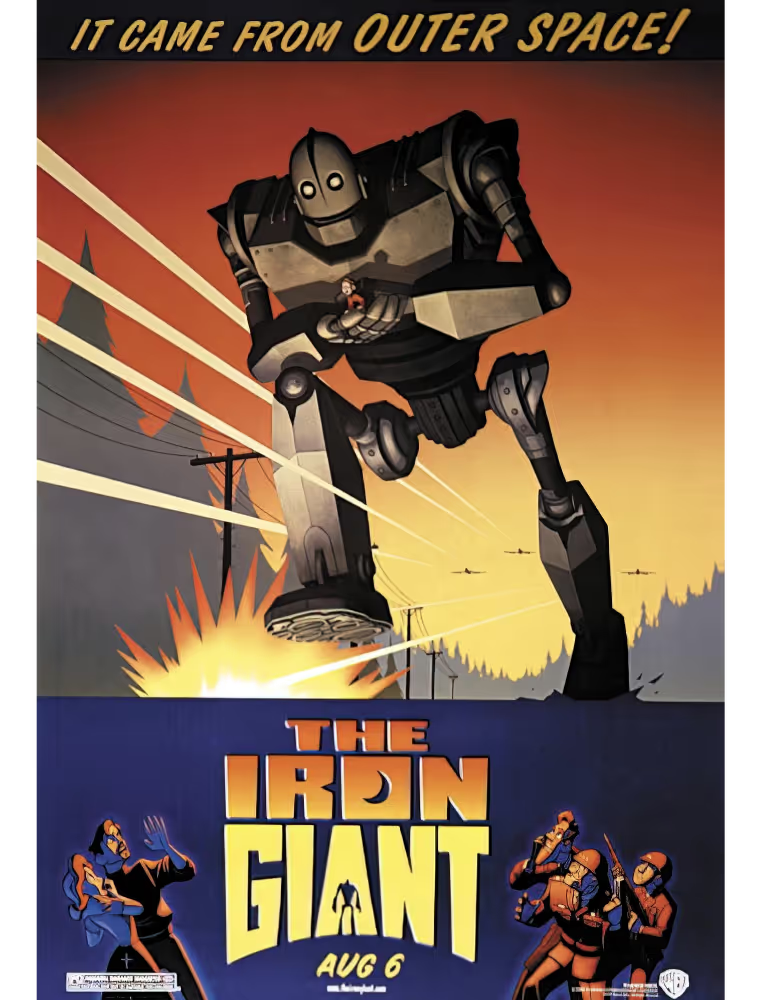
The Iron Giant (1986 / Cert PG) – Directed by Brad Bird, with Vin Diesel voicing the Giant, this Cold War-era story follows a boy who befriends a giant robot while the military seeks to destroy it, blending mechanical wonder with emotional storytelling.
Atlantis: The Lost Empire (2001 / Cert U) – A Disney aminated film featuring voices including Michael J. Fox, following an expedition to find the lost underwater civilisation of Atlantis, complete with submarines, retro exploration tech, and industrial-era styling.


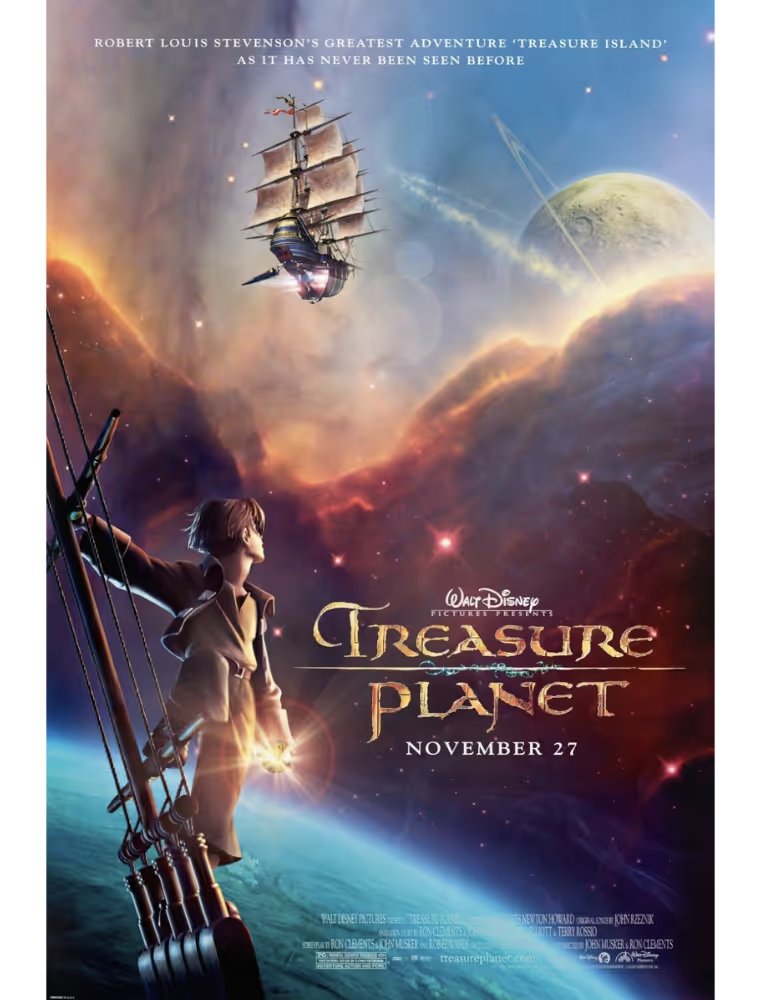
Treasure Planet (2002 / Cert U) – A Disney aminated space adventure starring voices including Joseph Gordon-Levitt, reimagining Treasure Island with solar-sailing ships, mechanical navigation, steampunk gadgets, and nautical-style exploration across the galaxy.
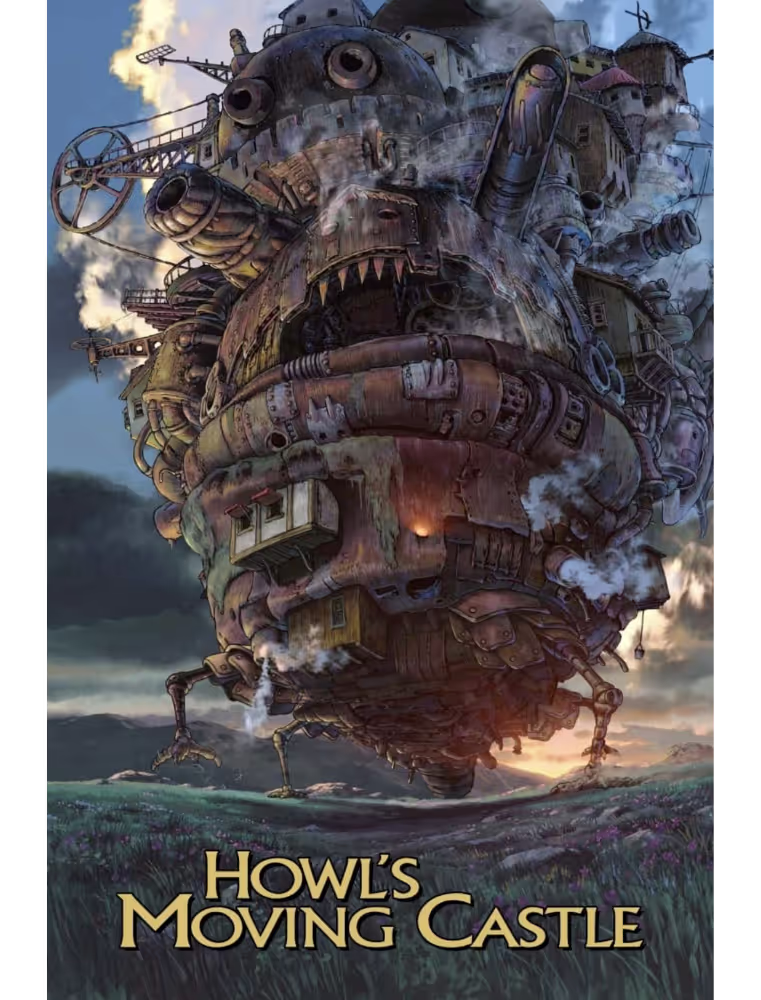
Howl’s Moving Castle (2004 / Cert U) – A Studio Ghibli fantasy directed by Hayao Miyazaki, featuring English voice work including Christian Bale. A young woman cursed into old age discovers a magical walking castle powered by fire, gears, and enchanted machinery in a whimsical wartime world. Not strictly steampunk, but its moving fortress and airships are iconic.
Hugo (2011 / Cert U) – Directed by Martin Scorsese and starring Asa Butterfield, Chloë Grace Moretz, Ben Kingsley, and Sacha Baron Cohen. Set in a Paris train station, it follows an orphan who uncovers a hidden automaton and a mystery tied to early cinema and intricate clockwork invention. Critically acclaimed and Oscar-winning.